Jan-Lukas Else

Tech, life and everything else

šŸ’¬ Micro: 2021

This section is for short notes, thoughts or IndieWeb interactions.


Published on in šŸ’¬ Micro

My home and code server now has 2 TB of SSD storage and 16 GB of RAM. While I’ll be using the storage for backups, etc., I’m not quite sure what I can use the 16 GB of RAM for yet. What else can I run besides Home Assistant, AdGuard Home, Drone and Tailscale? I still have my VPS running my websites, Miniflux, Bitwarden, Firefox Sync Server, RSS-Bridge, Firefly III, Nitter and Gitea. šŸ¤”

View

Published on in šŸ’¬ Micro

Sometimes I am a perfectionist. Having previously made my private diary blog available via a Tailscale sidecar container in my Tailnet, I have now integrated Tailscale directly into GoBlog. Both Tailscale and Tailscale’s Let’s Encrypt certificates can be configured directly in GoBlog. No sidecar container is needed anymore. A much simpler solution! (And Tailscale rocks!)

View

Published on in šŸ’¬ Micro

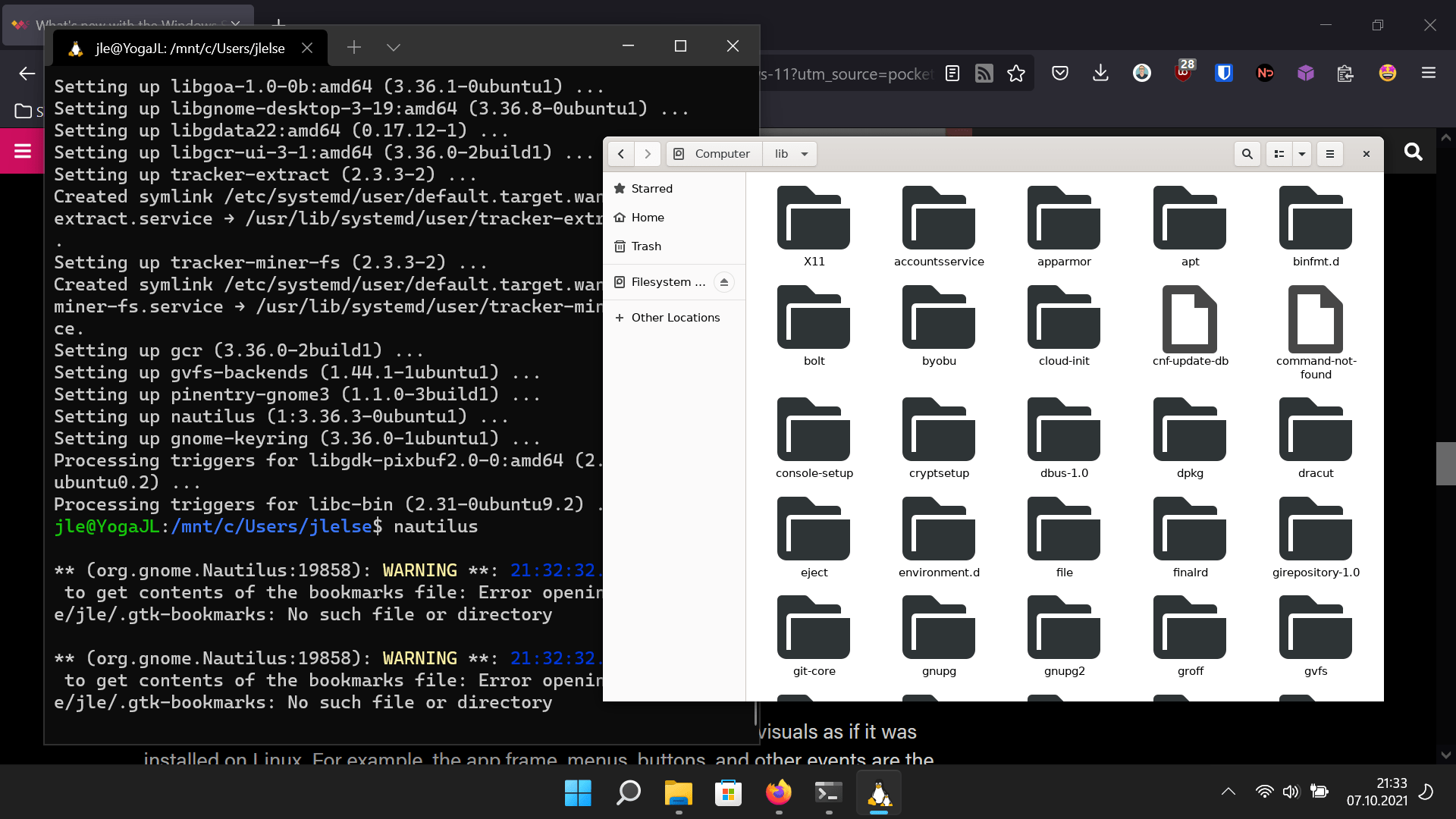
Guess who installed Windows 11 and can now easily run Linux GUI apps without having to jump through all the hoops that were once necessary? Quite impressive… And my laptop (supposedly built in 2013) is not even officially supported for Windows 11, but still runs great!

šŸ–¼ļøĀ View

Published on in šŸ’¬ Micro

Nice, Firefox 93 got released. The big news is support for the AVIF image format, but Firefox finally has a datetime-local input implementation now!

View

Miniflux 2.0.33

Published on in šŸ’¬ Micro

Miniflux 2.0.33 got released. An exciting release because it features Telegram integration (new articles can be sent via Telegram) on the one hand, and on the other hand it includes my contributed changes to also hide individual feeds on the unread list and not just whole categories.

View

Published on in šŸ’¬ Micro

Tailscale excites me again and again! Now it is also possible to get TLS certificates for nodes. I immediately got to work and integrated this into GoBlog, so that the browsers no longer complain when I log into my diary – a http:// page, which is already encrypted through Tailscale…

View

Published on in šŸ’¬ Micro

Yesterday and this morning I worked from the office rather than from home due to planned power interruptions. Impressions: My monitor at home is better, my chair is more comfortable and at home it is quieter (there is construction work in the office right now). Only the Internet is much faster in the office.

View

ā€œLess Meatā€

Published on in šŸ’¬ Micro

James is trying to eat less meat:

Each burger we consume comes with a at least of costs baked in: the direct cost of a life of the animal and environmental (cutting down forest to make room for cows, shipping animals across an ocean to get processed in a foreign country, just to be shipped back to their origin for sale).

If you can change your default, you can make substantial changes with significantly less effort.

Likewise, I’ve changed my defaults for meat. As beef as it has a higher CO2 footprint per kilogram than pork or chicken, I mostly stopped buying beef and replace it with pork or chicken. Default changed to not beef. The other default I’ve been working on default: no meat.

I myself barely eat meat either, my default is ā€œno meatā€ as well. And to be honest, I don’t miss anything, I’ve never eaten much meat.

Vegetarians or vegans often have to deal with arguments that without meat they would lack vitamin B12, for example. If only those who make such arguments knew that many additives are also added to the animal feed…

Vitamin B12 must also be added to some animals

It’s more complicated with pigs, says Ingrid Vervuert: ā€œApart from milk, eggs and fishmeal, no animal products may be fed to pigs. As a result, the normal feed spectrum for pigs is poorer in vitamin B12.ā€ Therefore, vitamin B12 is added to the feeds of these animals, as well as poultry - for the same reasons.

– Quarks (Translated with DeepL)
https://jamesvandyne.com/783676a7-7be2-45ce-8352-ce953b32eae1

View

Ad-less YouTube on my Chromecast

Published on in šŸ’¬ Micro
Updated on

Someone gave me the tip (thank you!) to use VLC to play YouTube videos with my Chromecast. Although it is possible to stream YouTube videos directly in the VLC Android app itself, it somehow doesn’t work in combination with the output to the Chromecast. An alternative is of course to first use NewPipe to download a video and then play it on the Chromecast using VLC.

However, I have now found another possibility. In Windows, you can also use Microsoft Edge to stream YouTube videos to the Chromecast. There, they are not opened with the YouTube app (which constantly shows me ads), but only with a video player. I have now tested this with a few videos and did not see any ads. Whether uBlock Origin also plays a role in the Edge browser, I have not tested.

Update: I came across SmartTubeNext, which does exactly what I want. YouTube Premium and Premium Lite are not options for me, as Premium Lite is not available in my country and I don’t need the music in Premium, as Deezer is my music streaming service of choice.

View

Published on in šŸ’¬ Micro

I regularly watch videos on YouTube via my Chromecast with Google TV. But I feel like I’m seeing more and more commercials. It’s almost like private television, where every video is interrupted every few minutes with advertising. And most of the time it’s two commercials in a row that can’t be skipped. I think I have to think about an alternative solution for YouTube…

View

Jan-Lukas Else