
My first Smart Home steps
⚠️ This entry is already over one year old. It may no longer be up to date. Opinions may have changed.I recently wrote about that my Raspberry Pi now has an SSD. With this, the Pi now runs quite fast and I also no longer have any concerns if I ever install something that also stores data. I even wrote in the last paragraph that I now want to get a bit involved with smart home.
No sooner said than done. Immediately after publishing the post, I installed Home Assistant and tried it a bit. After integrating my router (a FRITZ!Box) and AdGuard Home with Home Assistant and getting a feel for integrations, devices and entities, I also did a bit of online shopping.
First, I ordered a ConBee II USB receiver. This can make ZigBee-compatible devices available in Home Assistant using the deCONZ and Phoscon programs. I also tried the direct ZigBee integration in HA, but it has problems already during the setup.
I also ordered two temperature, humidity and air pressure sensors (from Aqara formerly Xiaomi) and a thermostat (essentials Premium).
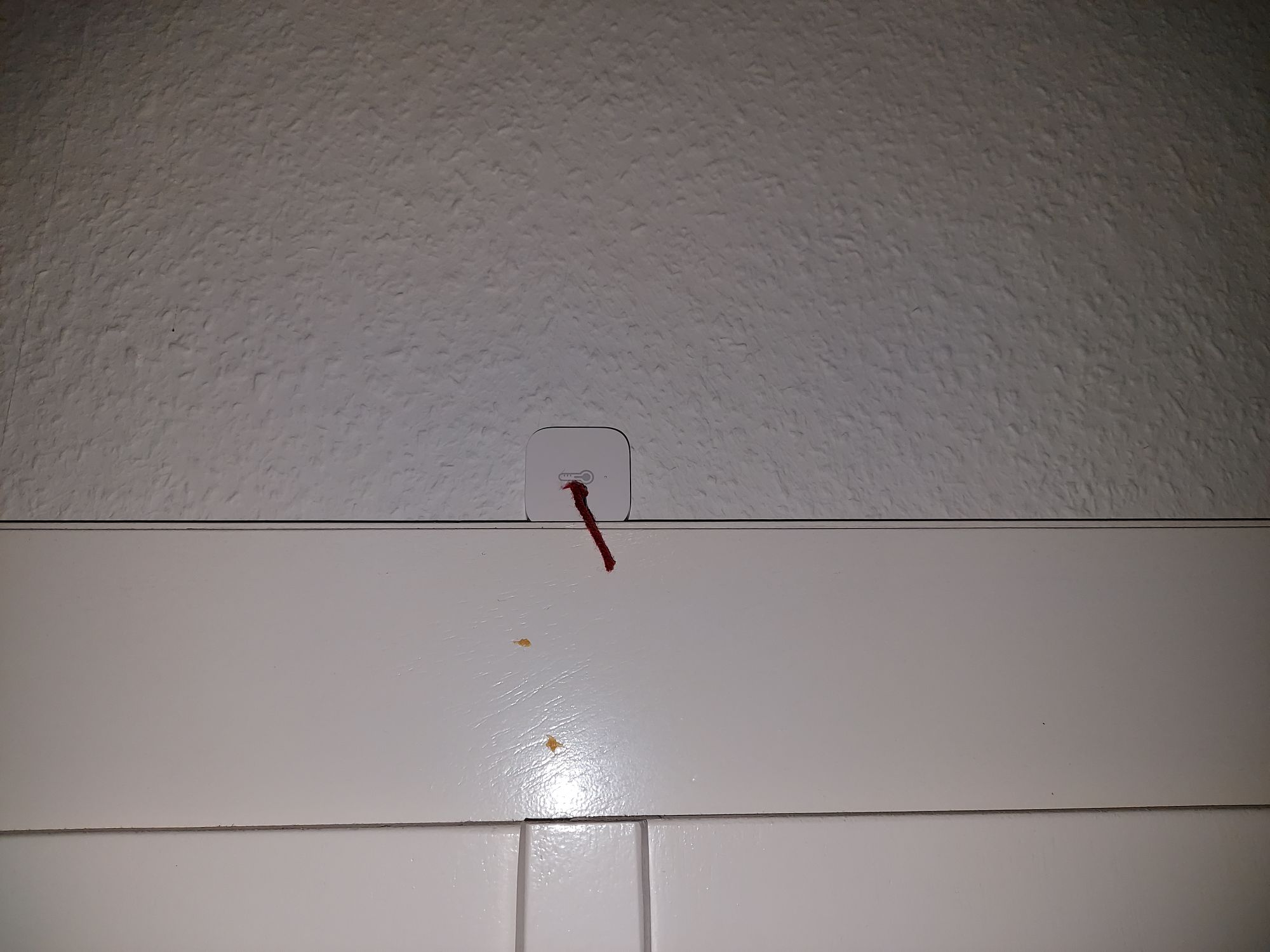
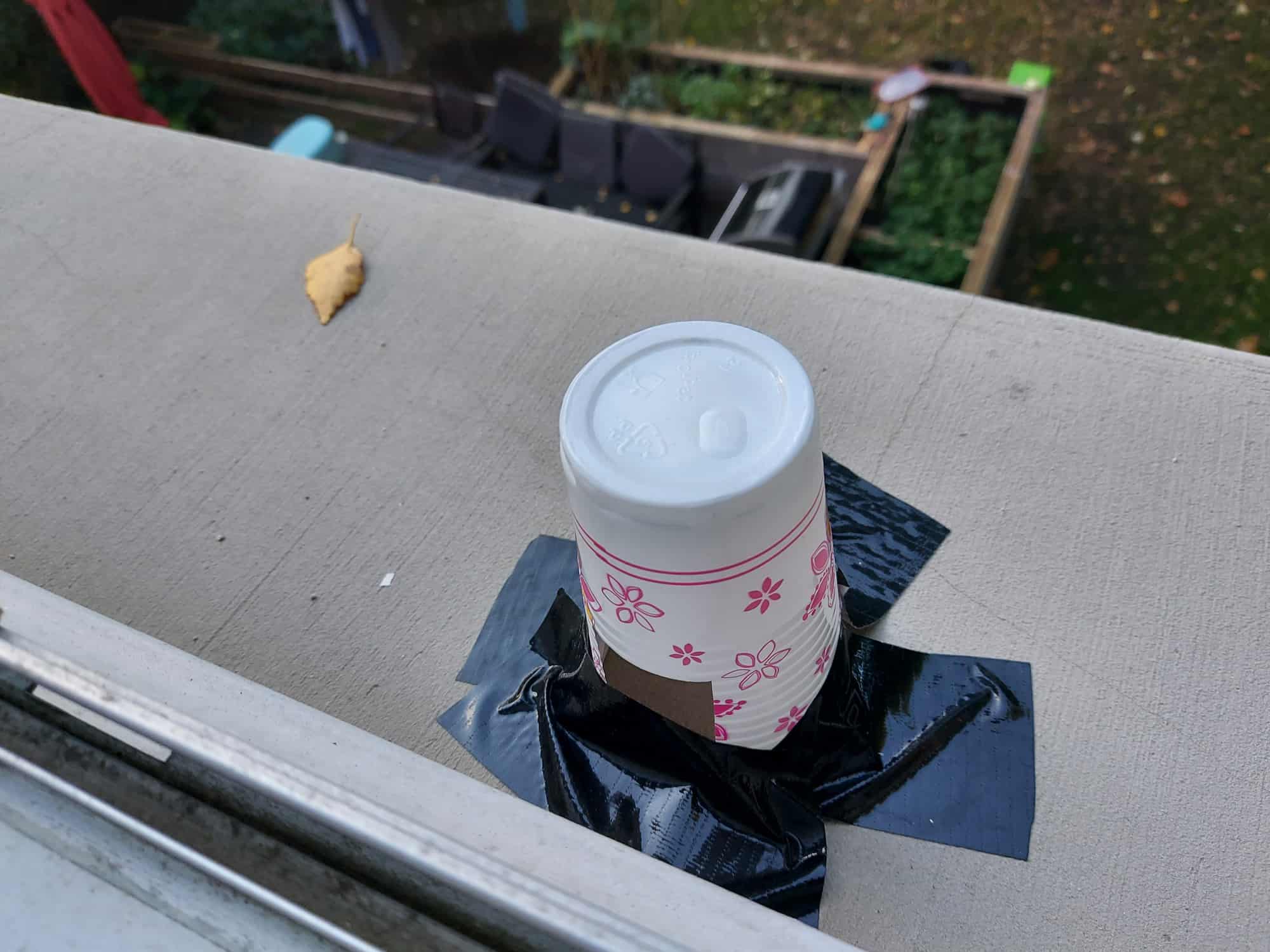
When everything arrived yesterday I tried to set up the receiver and the devices, as I said. After a few failed attempts, updating the receiver’s firmware, and realizing that you should only run the ConBee II via USB 2 with an extension cable, I’ve at least been able to connect the temperature sensors. One of them is now on a door frame in my room, a second one I fixed outside protected from rain on the windowsill. In the HA dashboard, all the data from them is clearly displayed.
I was also able to connect the thermostat via Phoscon. However, it is not displayed directly in the Phoscon app, but only in deCONZ. The reason why I have now sent the thermostat back is that the temperature in Home Assistant could be displayed, but the adjustment for some reason did not work. I tried many things, but in the end came to the conclusion that this thermostat is probably not as compatible as I thought.
An alternative would be thermostats that I connect directly to the FRITZ!Box via DECT. But after a bit of consideration, I now believe that I prefer to continue to regulate the heating manually. After all, I only turn on the heater when I want to heat, to avoid crackling pipes.
But at least with the temperature sensors I could now replace a first generation Raspberry Pi, to which two temperature sensors were previously connected by cable, whose values could be seen via a simple website. This was a small project of my father and was running for several years without any problems. However, it is a bit stupid that two Raspberry Pis permanently consume power and the cover, which should protect the outdoor sensor from rain and sun, was no longer intact. I also would have preferred to know the temperature in the room where I stay all the time and not in the guest room, which I mainly use for drying clothes.
In Home Assistant, I also enabled integration with OpenWeatherMap and clicked together the following dashboard:
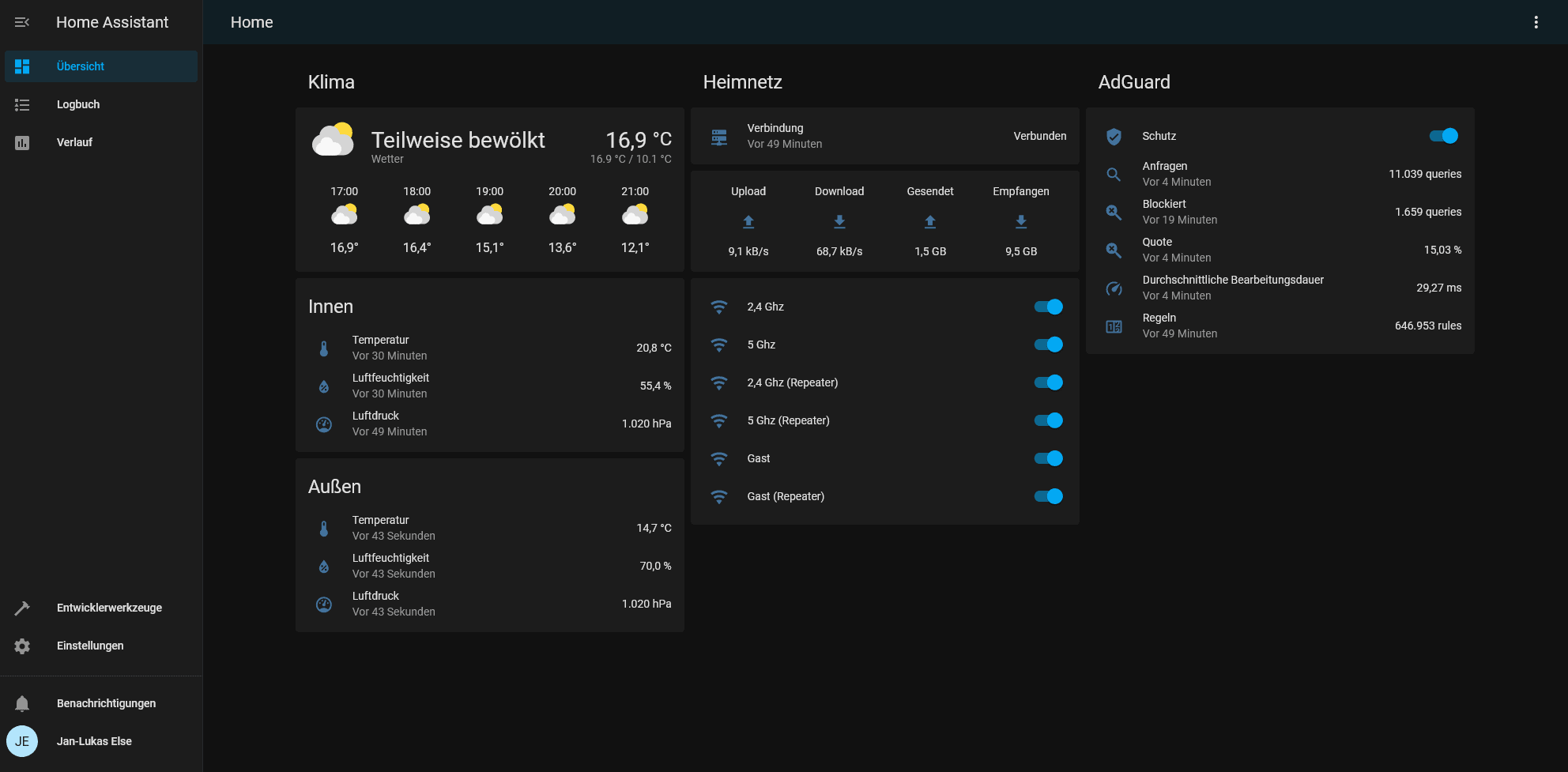
I am now quite satisfied and thinking about what else I could integrate. Thermostats rather not. Lamps maybe? But at the moment I can’t think of any significant advantage that a smart lamp control would have in my apartment.